Material Handling & Conveyor,
Process Systems & Equipment,
Stainless Steel Fabrication, Installation
Contact us now: 1-914-631-3800
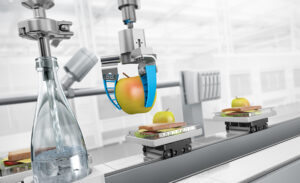
Today, artificial intelligence (AI) technology may be the most impactful entity in business. Companies across various sectors are employing this advanced technology to gather data that yields actionable insights, enabling informed business decisions. According to projections, more than 50% of companies are anticipated to implement AI in some form by the end of 2023, with AI expected to contribute to 45% of global economic gains by 2030. Maricha Ellis, global vice president of digital transformation at JBT, explores.
AI technology has been deployed in the food and beverage industry for years, and its usage will only escalate, becoming indispensable for manufacturers. As they strive to boost efficiency and throughput while minimising overall resource consumption, AI and predictive analysis technology can form the backbone of these efforts.
Here are four ways this revolutionary technology can assist food and beverage manufacturers in creating more robust, safer, efficient and sustainable systems to increase throughput and their bottom line.
Sustainability is a paramount concern for both food and beverage processors and consumers, and is likely to remain a priority. An IDC industry report suggests that nearly 30% of food and beverage decision-makers consider consumer demand for eco-friendly products as their chief driver for organisational change toward enhanced sustainability. AI and predictive analytics empower manufacturers to operate sustainably and efficiently to meet customer demands.
One significant step towards sustainable operation is minimising food product waste during production. Globally, each year around 931 million tons of food are wasted, generating 3.3 gigatons of carbon dioxide annually. AI and predictive analytics’ vast potential to enhance food safety and product quality ensure proper manufacturing and waste reduction. Whether it is machines actively processing products or traceability systems identifying any issues in products as they journey through the supply chain, modern AI technology optimises food production processes, resulting in increased throughput and more sustainable production systems.
Enable transparency Increasingly, manufacturers and processors are expected to be transparent with customers and stakeholders. This transparency is both ethically right and practically necessary, given our industry’s impact on billions of people worldwide. Many companies across the sector have acknowledged and prioritised transparency in their processes, finding AI and predictive technologies to be instrumental.
Many businesses communicate sustainability goals and product benefits directly to stakeholders. The expansive capabilities of AI technology facilitate effective and accurate reporting. This fortifies the sustainability efforts AI already bolsters within the production process.
Among the most influential technologies in food and beverage today are predictive maintenance systems, which help manufacturers avoid interruptions and catastrophic failures related to maintenance. These AI-powered systems identify and analyse machine patterns throughout the production process, predicting potential failures. This prediction allows floor teams and engineers to rectify machine issues during planned production downtime, preventing disastrous consequences.
Not only does this boost production capacity and operational efficiency, but it’s also crucial for employee safety. 24% of food workers have been injured at their current job, and 17% were injured in their first year. Food manufacturing workers also have a 60% higher rate of occupational injury and illness than workers in other industries. Implementing AI and predictive technologies to predict and prevent machine failures creates safer and more conducive environments for these valuable employees.
Mitigate labour challengesNearly all industries, including food and beverage, have been grappling with labour shortages since the Covid-19 pandemic. Manufacturers have struggled to recruit and retain employees across their plants, significantly impacting their ability to meet consumer demand.
AI and predictive technologies enable manufacturers to produce more products with fewer employees. They also equip these employees with greater knowledge and intuition to produce superior products more efficiently and sustainably. AI will be instrumental in the automation journey for food processors. These systems also help to retain institutional knowledge and expertise, which can be harnessed and built upon by future generations.
AI algorithms can analyze equipment energy consumption data and identify opportunities to streamline HVAC, refrigeration, lighting, and other systems. This allows processors to reduce energy waste, lower costs, and meet sustainability goals. Smart sensors with AI can track usage patterns and adjust equipment in real-time as needed.
Machine learning models can monitor hygiene metrics like surface temperatures, water purity, and cleaning chemical concentrations. The models can spot anomalies, trigger alerts for human review, and even automatically adjust cleaning cycles. This helps processors avoid contamination risks.
AI-enabled computer vision can automatically scan equipment and detect potential defects or damage. This allows issues to be addressed proactively before they cause downtime. AI can also optimize maintenance routes and technician schedules to maximize efficiency.
The impact and opportunities presented by AI and predictive technology cannot be overstated. Now is the time for manufacturers and processors across the food and beverage sector to effectively utilise these innovative systems to create better workplaces, systems, products, and business strategies. These technologies offer companies the capabilities to achieve these improvements. AI delivers unmatched visibility into food production assets and processes. It enables intelligent automation that is flexible, efficient, and waste-free. Companies that leverage AI will gain a competitive advantage in product quality, sustainability, and customer satisfaction. With an innovative partner, processors can tap into AI’s full potential while maintaining safety and ethics.
Top 10 Ways to Improve Efficiency in Your Production Line
In today’s highly competitive manufacturing landscape, optimizing production line efficiency is crucial for companies looking to maximize productivity and profitability. However, knowing where to start can be challenging when seeking to realize untapped efficiency potential. This article outlines 10 impactful strategies that manufacturers can implement to streamline operations, upgrade technology, reduce waste, and boost speed and quality. From preventative maintenance to inventory management and workflow optimizations, we will explore tangible tips to incrementally or dramatically improve your production line performance. Whether looking to make minor gains or transform processes, this guide provides value-driven insights to reach your manufacturing goals.
Taking a magnifying glass to each step in your workflows could uncover game-changing efficiencies. Are redundant actions eating up time? See if combining certain steps might optimize the process. Could rejiggering the sequence get products from A to B faster? Any manual tasks ripe for automation? Time your processes, find the lags. Assess communications between teams – are handoffs hampered by gaps? Refresh SOPs and instructions to nix outdated or inefficient ways of doing things. An outside perspective may expose improvement opportunities hiding in plain sight.
Keeping eyes on your processes is mission-critical for dialing in quality and efficiency. Get inline sensors, data tracking – give yourself insider intel to catch bottlenecks. Takt time tracking makes sure you meet targets, keep the customers happy. Vision systems red-flag defects before they spread, saving big on rework. Break it down, dig into each process segment to pinpoint problem points. Crunch the numbers to see where things need rebalancing or SOP refreshers. Shopping for upgrades? Emphasize built-in monitoring that converts data into action. Lean on vendor expertise to select tools that seamlessly fit needs.
Smooth-flowing materials are the lifeblood of efficient production. Could conveyors, guides, floor markings steer parts from A to B faster? Prioritize ergonomic, waist-height part transfer. Compact layouts minimize travel between stations. Gravity conveyors reduce energy costs. Watch for collisions and pile-ups. Standardize containers for plug-and-play handling. Visual controls improve material direction. Smoothing logistics cuts waste and revs up processes.
A centralized Production Control System serves up an eagle-eye view across manufacturing. Monitor production speed, asset performance, quality, downstream processes – optimize using data insights. Coordinate equipment and processes for seamless synergy. Overall Equipment Effectiveness analytics help refine performance. Building a system? Define must-have functionality like scheduling, dispatching, MES – tailor it to your needs. Engineers can customize a system fitting your processes like a glove.
Preventative maintenance is crucial for upholding quality and speed. Scheduled equipment inspections, testing, parts replacement can catch issues before they escalate. Develop checklists for proactive maintenance procedures. Provide training and tools to empower maintenance teams. Enforce schedules to stay on top of servicing needs. Well-tended machines work better and last longer, avoiding costly breakdowns.
Put your line through its paces to uncover constraints. Crank up the speed, stress test maximum capacity – where’s the choke point? Whatever’s holding you back, now it’s exposed. Address workflow kinks, resource lags, equipment limits revealed through testing. Don’t be timid, inch up speed until the tightest bottleneck pops. Use results to inform equipment purchases, process tweaks, layout optimization. Discover constraints only a maxed out system makes known.
Documenting standard operating procedures creates consistency and quality through shared best practices. Capture what top performers do and spread it across your workforce. Create visual, quick-reference instructions to enable employee success. Standard procedures increase quality while allowing feedback to enhance approaches. Offer thorough training when rolling out new standards and equipment. Set your team up for winning through shared knowledge.
Make sure your line’s not overloading some stations at the expense of others. Assess workloads, adjust as needed to spread labor evenly across the chain. Adapt workflows to position personnel for optimal efficiency. Mismatched work volumes create slowdowns and bottlenecks. Strike the right balance so output flows smoothly.
Cutting overproduction waste starts with aligning output to demand forecasts. Cull excess stockpiles by sharpening just-in-time inventory tactics. Get an ERP system for real-time visibility. Match production schedules tightly to incoming orders. Trimming excess inventory lightens costs and storage needs. Stop producing for shelves and start producing for customers.
Replace worn equipment before downtime crashes the party. Prioritize upgrades that promise boosted speed and efficiency. Calculate long-term savings from increased performance and maintenance avoidance. Evaluate flexibility to adapt to evolving needs. Modern machines often have built-in data capabilities too. While upgrades require capital, the investment can pay itself back over time.
With a strategic eye towards continuous improvement, there are myriad ways to unlock efficiency gains within your production lines. Beginning with targeted assessments to identify gaps, manufacturers can apply these strategies in a systematic fashion to optimize equipment, workflows, quality control, and more. While reaching your full productivity and profitability potential requires investment and dedication, the long-term benefits are far-reaching. Partnering with specialist teams can provide invaluable expertise to implement changes smoothly.
The key is commitment to ongoing enhancement through both technical and cultural shifts. By engaging your workforce, leveraging data, and employing the latest technologies, you can bring your manufacturing processes closer to their full potential, one step at a time
Westco F.G. Corporation has been servicing the Food, Dairy, Beverage, and Pharmaceutical industries since 1971. We are dedicated to the design, manufacturing, installation, and service of Process Control Systems and Material Handling Equipment.
We are committed to servicing our customers in a prompt and professional manner. Our sales engineers are supported by a staff of dedicated inside sales consultants who can readily provide you with pricing and availability on the many new and used sanitary items and equipment, as well as custom fabrications, conveyor, and material handling equipment. In addition, our staff of field engineers, in-house process design, and controls engineers, are available to provide you with engineered, cost-effective solutions to optimize your productivity and meet your needs in the most efficient way possible. Westco has a longstanding reputation for on-time project completion and post-project service and support.